
Shopping centres and retail
Search recorded footage to find a person in a busy shopping area using their clothing or the bags they were carrying.
Find someone in recorded CCTV footage without knowing their name. Upload your videos and search on what the person was wearing and what they were carrying
Saved for each person
Interface simulation: an illustration of the workflow, not a live analysis
What it is
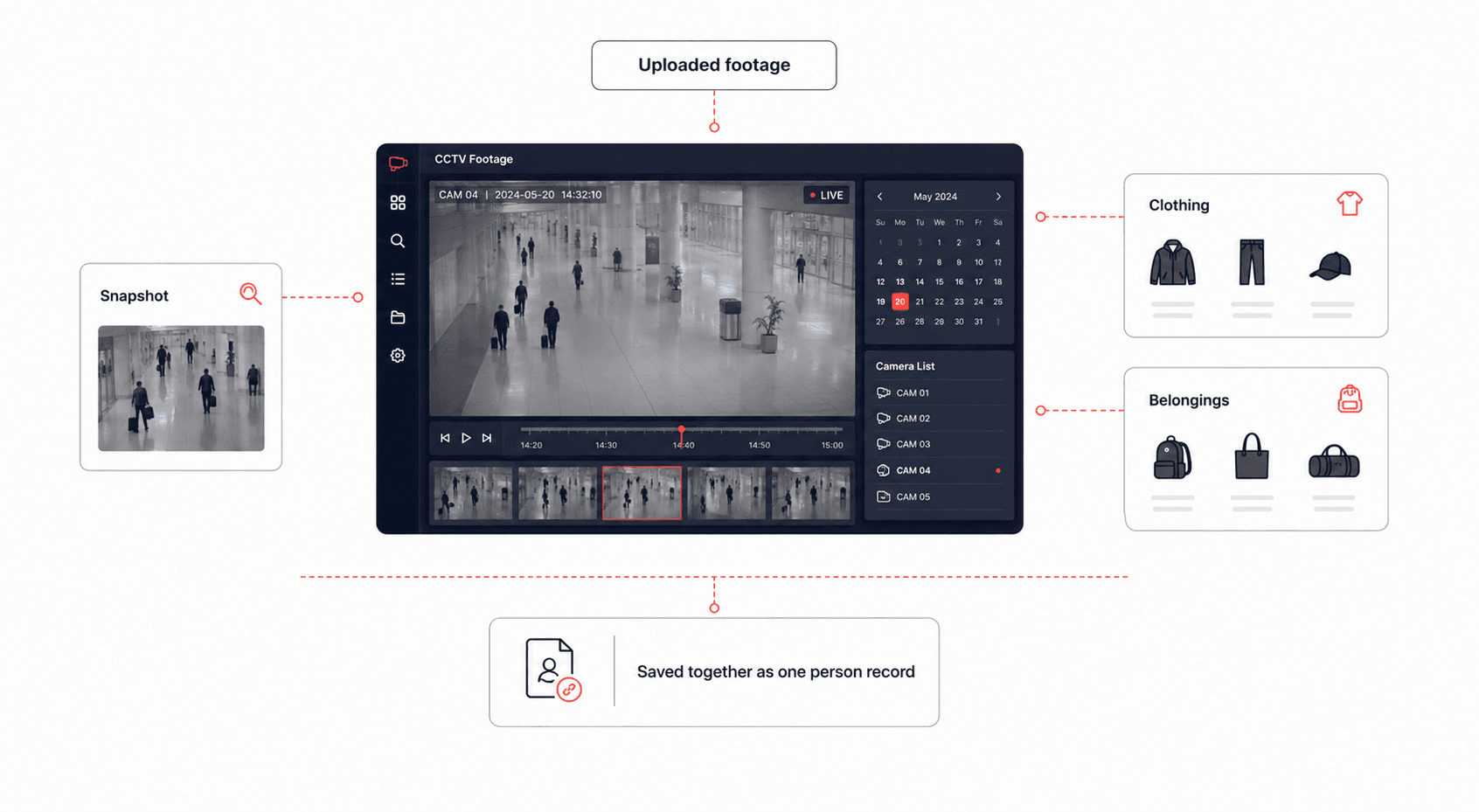
AnonymousPersonID helps security teams find and review people in recorded CCTV video without needing to know their name or any personal details. You upload one video or several, and the software builds an organised record of the people it finds, each with a snapshot, the colour of their clothing and any belongings they were visibly carrying. Finding that person again later becomes a search rather than a second viewing.
It replaces the part of an investigation where somebody sits and watches hours of recordings hoping to spot the right person.
A person can be found without knowing their name. The search runs on what they were wearing and what they were carrying.
Recorded footage
Upload video from one CCTV camera or several for review
Appearance search
Find a person by clothing colour or the belongings they carried
Person records
A snapshot and visible details saved for every person found
Footage from many areas
Review people across recordings from different parts of a site
How it works
Recorded CCTV video from one camera or several is taken in together.
Each person is kept track of as they appear across the recordings.
Each person found is given a separate record inside the processed footage.
A snapshot is stored alongside details such as clothing colour and the bags or cases the person was carrying.
The records are organised so a person can be found later by appearance or by belongings.
Interface simulation: an illustration of the workflow, not a live analysis
Recorded CCTV video from one camera or several is taken in together.
Each person is kept track of as they appear across the recordings.
Each person found is given a separate record inside the processed footage.
A snapshot is stored alongside details such as clothing colour and the bags or cases the person was carrying.
The records are organised so a person can be found later by appearance or by belongings.
Product exclusiveness
People tracked for you
Interface simulation: an illustration of the workflow, not a live analysis
Market comparison
Finds people in uploaded footage
Keeps a separate record for each person
Saves a snapshot of each person
Search by clothing colour
Search by visible belongings
Handles footage from several cameras
Helps locate someone in a crowd
Reduces time spent on recordings
Works without knowing a name
The architecture
A record per person
A person is found by what they wore and carried, not by identity.
Use cases by sector
Search recorded footage to find a person in a busy shopping area using their clothing or the bags they were carrying.
Review recordings from different areas to locate a passenger using visible details such as clothing and luggage.
How the sector deploys itReview recorded footage and locate people who have moved through different parts of a workplace.
Find and follow a person across recordings from common areas when their identity is not known.
Help security teams locate a person within recordings of large crowds and busy public areas.
Review recordings from different sections of a large facility and locate people by appearance or belongings.
Search recorded event footage to locate a person in a crowd using their clothing or visible belongings.
Deployment strategy
01 · Upload the footage
Interface simulation: an illustration of the workflow, not a live analysis
AnonymousPersonID is built for recorded CCTV footage. You can upload video from a single camera or from several covering different areas, and it gives you one organised view of the people found across all of them.
What is kept about each person, how a search is actually run, and how much footage it reaches across
No. It works on recorded CCTV footage. You upload video from one camera or several, and those recordings are processed before a search can be run against them.
Yes. A person can be searched for on simple visual details such as the colour of their shirt or trousers, which makes it possible to find someone when their name and other personal details are unknown.
Each person found gets their own record holding a snapshot plus the visible details: clothing colour, and noticeable belongings such as bags, backpacks, suitcases and other accessories in view.
Yes. You can provide footage from several CCTV cameras, so people are reviewed across recordings from different areas instead of checking every video one at a time.
A crowd is where finding someone by eye is hardest. A search on the person's appearance or belongings narrows the processed footage down to the results worth reviewing.
After processing finishes. The recordings are turned into organised records first, and the search then runs against those records rather than against the raw video.
The rest of the line
Where it runs
Each sector page covers the threat model, the controls, and the regulators that apply.
Bring your own footage. We will run it through the Adaptive Cognito Engine and walk you through the findings.