Skip to content
FaceOff Technologies

Health & Education

Protect the exam, not just the login

Remote assessment moved the exam hall onto a laptop, and the question of who is sitting the paper became a question about a video window. FaceOff confirms the candidate throughout the assessment and gives the qualification something an employer can verify afterwards, without turning an exam into an interrogation

Overview

The exam is only worth the identity behind it

Protect exam integrity in remote assessment and confirm the identity of the person sitting the paper or presenting a qualification.

Education security and data protection

An exam has always rested on a quiet assumption: that the person who wrote the paper is the person whose name is on it. In a hall, an invigilator settled that simply by being present. Remote assessment removed the invigilator and left a video window in their place.

A window is easy to work around. A candidate can be coached from just outside the frame, replaced part way through by somebody who knows the subject better, or helped by material on a second screen the camera never sees. Later the certificate itself becomes the target, because a qualification is trusted by employers and universities who have no practical way to check it.

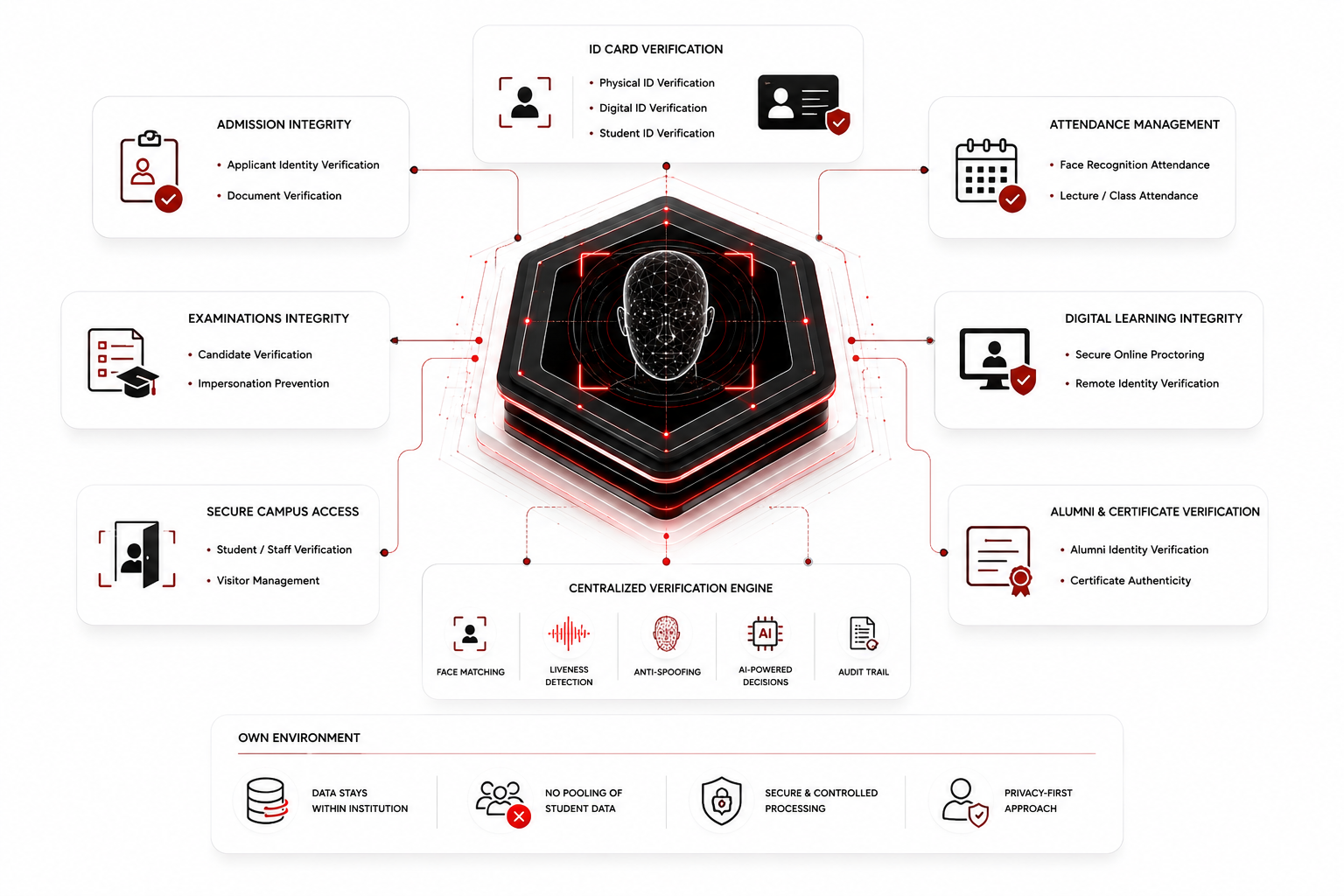
The checks below confirm the candidate through the assessment rather than only at the start, and give a qualification something anybody can verify. Every finding goes to a member of staff to review, because an academic decision belongs to your institution and never to software.

What you deploy

Products for Education

These are the products universities, examination boards and training providers deploy most often, following an assessment from the moment a candidate signs in to the point where the qualification is presented to somebody else.

BehaviorBioAuth (Onboarding)

Behavioral biometric identity verification.

Explore

BehaviourLens AI

Autonomous voice interviewer with trimodal audio, visual and linguistic forensics.

Explore

DeepBrowserGuard

Check the images and video people meet online, while they are on screen

Explore

CrossCam PersonTrack

Live face recognition across your camera network, matched against your watch-lists.

Explore

QuantumSafe QR

Post-quantum QR for secure credentials and access.

Explore

Key capabilities

What FaceOff checks in education

What this sector asks for most often. Each one runs at the moment a decision is being made, and each returns a result a reviewer can explain to somebody else.

Know the candidate is still the candidate

Confirmation continues through the assessment rather than stopping at sign in, so a paper that changes hands part way through is surfaced while the session is still open instead of being inherited from a check that passed an hour earlier.

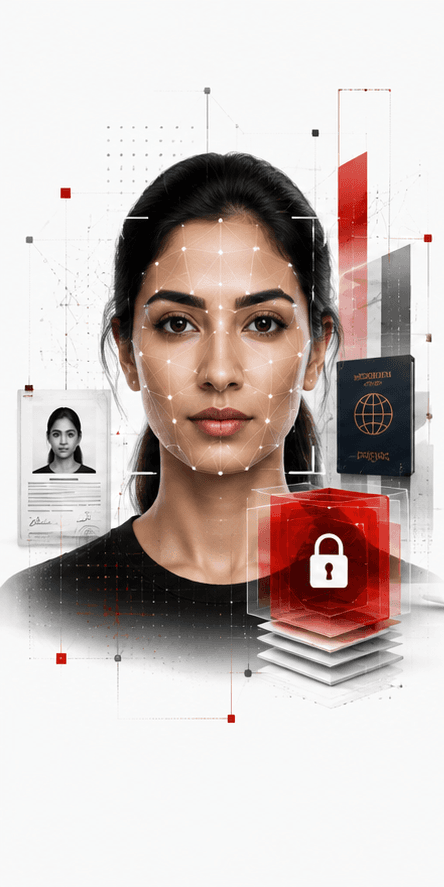
A candidate's face read against their identity document

Run an assessment a recording cannot pass

Somebody presenting a photograph, a screen capture or video of the candidate filmed earlier should not be accepted as that candidate. The check is built to resist material prepared in advance rather than treating any face in front of a camera as a person who is really there.

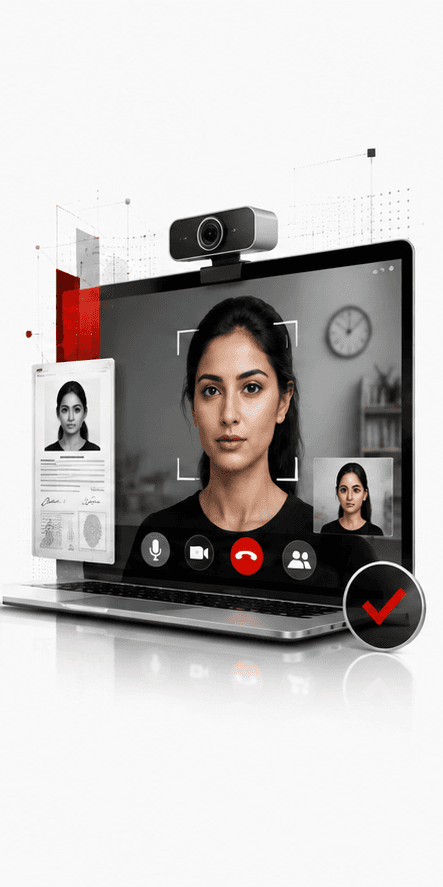
A remote assessment with the candidate on camera

Check the material shown during a session

Images and video that appear on screen during an online assessment or an admissions interview can be checked while they are still open, so a document or a clip offered as evidence is examined at the moment it is offered rather than long afterwards.

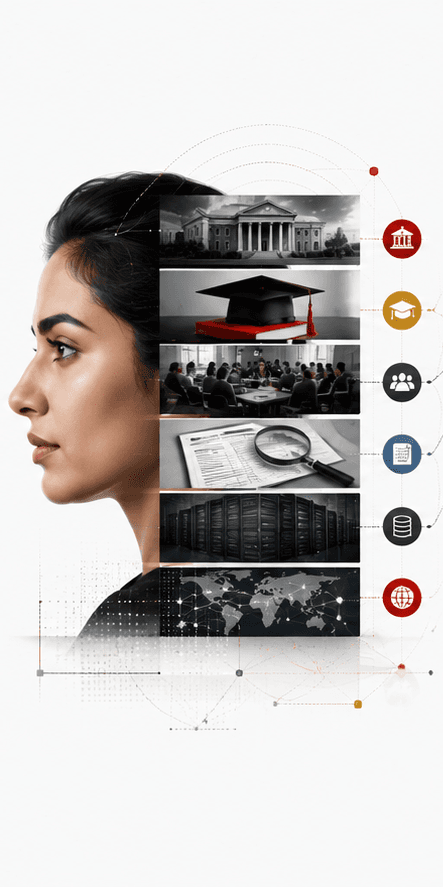
One candidate read across the institution's records

Give a qualification something an employer can verify

A certificate carries a code confirming it is genuine and has not been altered, and it can be checked without an internet connection. A copy of the code does not become a trusted code, which is the difference between a verifiable credential and a well printed one.

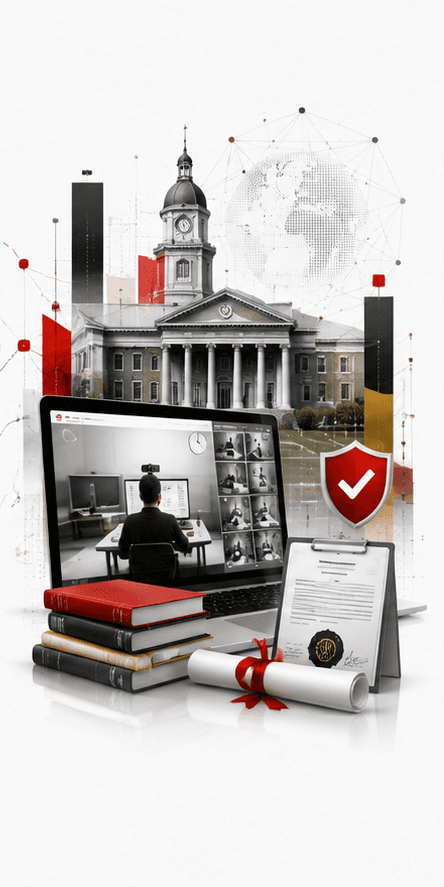
A certificate and an online class carrying a mark that can be checked

Hold a spoken assessment at any hour

A candidate can be interviewed by voice, with the conversation read across what was said, how it was said and how the candidate appeared while saying it. That makes a spoken component workable for a large cohort spread across time zones, where arranging a panel for every candidate is not.

Raise a question, never a verdict

Nothing here accuses a candidate of anything. Each finding reaches a member of staff with the reasoning attached, and what follows is your own academic process, which is also what makes an appeal answerable months after the exam.

Where it is used

What FaceOff runs in education

Every entry names a product on this site and describes it the way its own page does.

  1. Confirming who is sitting the paper

    BehaviorBioAuth checks identity from behaviour and keeps checking, so a candidate who is replaced part way through is caught.

  2. Reading a spoken assessment

    BehaviourLens AI holds a spoken conversation with a candidate and reads voice, face and words together.

  3. Media shown during a session

    DeepBrowserGuard checks images and video people meet online while they are on screen.

  4. Qualifications presented as genuine

    QuantumSafe QR gives a credential a code that confirms it is genuine and has not been altered.

Common questions

Education, answered

Yes. BehaviorBioAuth keeps checking through the session rather than only at sign in, so a change of person part way through is surfaced instead of inherited from the first check. The finding goes to a member of staff to review rather than ending the exam automatically.

See it score a real video

Bring your own footage. We will run it through the Adaptive Cognito Engine and walk you through the findings.