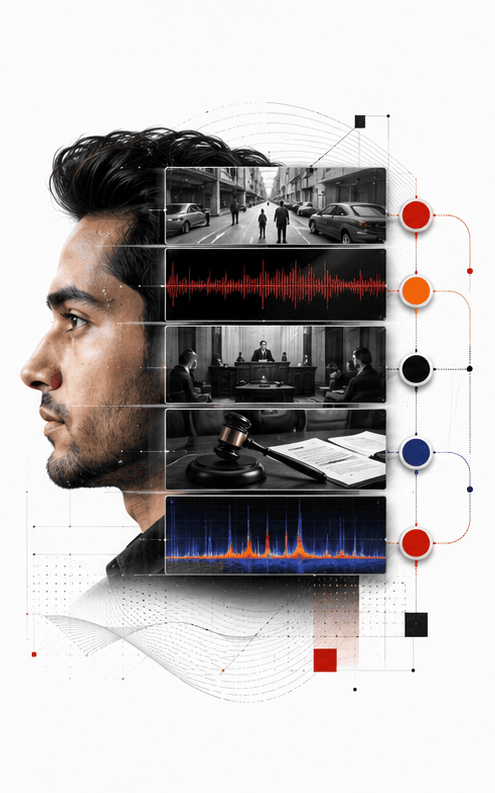
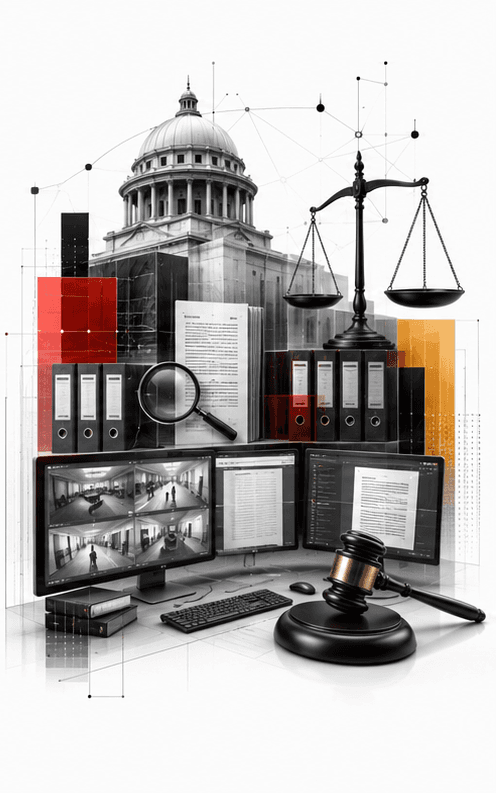
A case is decided on material that somebody produced: a recording of a call, footage from a camera, a photograph attached to a statement. For as long as anybody can remember, the argument about that material was an argument about what it showed. Increasingly it is an argument about whether it happened at all.
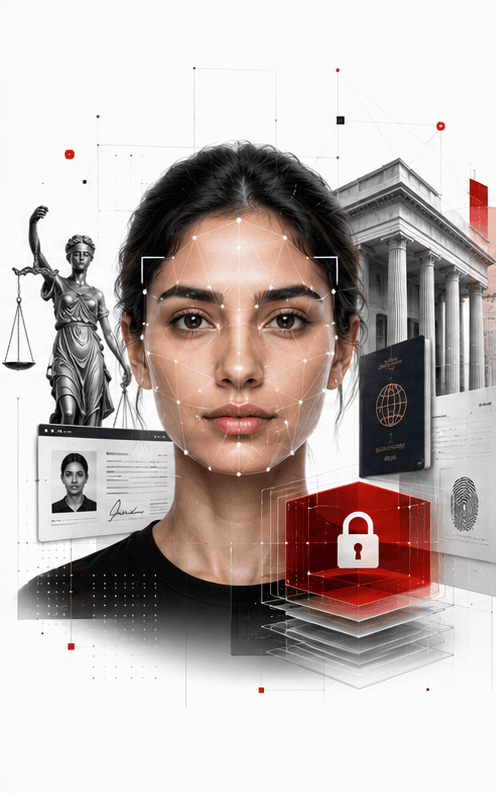
That is difficult for a process built on examination. A convincing forgery does not announce itself, and the people asked to judge it are lawyers, officers and judges rather than specialists in synthetic media. The reverse is just as damaging: a genuine recording can now be waved away by simply suggesting it was fabricated, and the suggestion costs nothing to make.
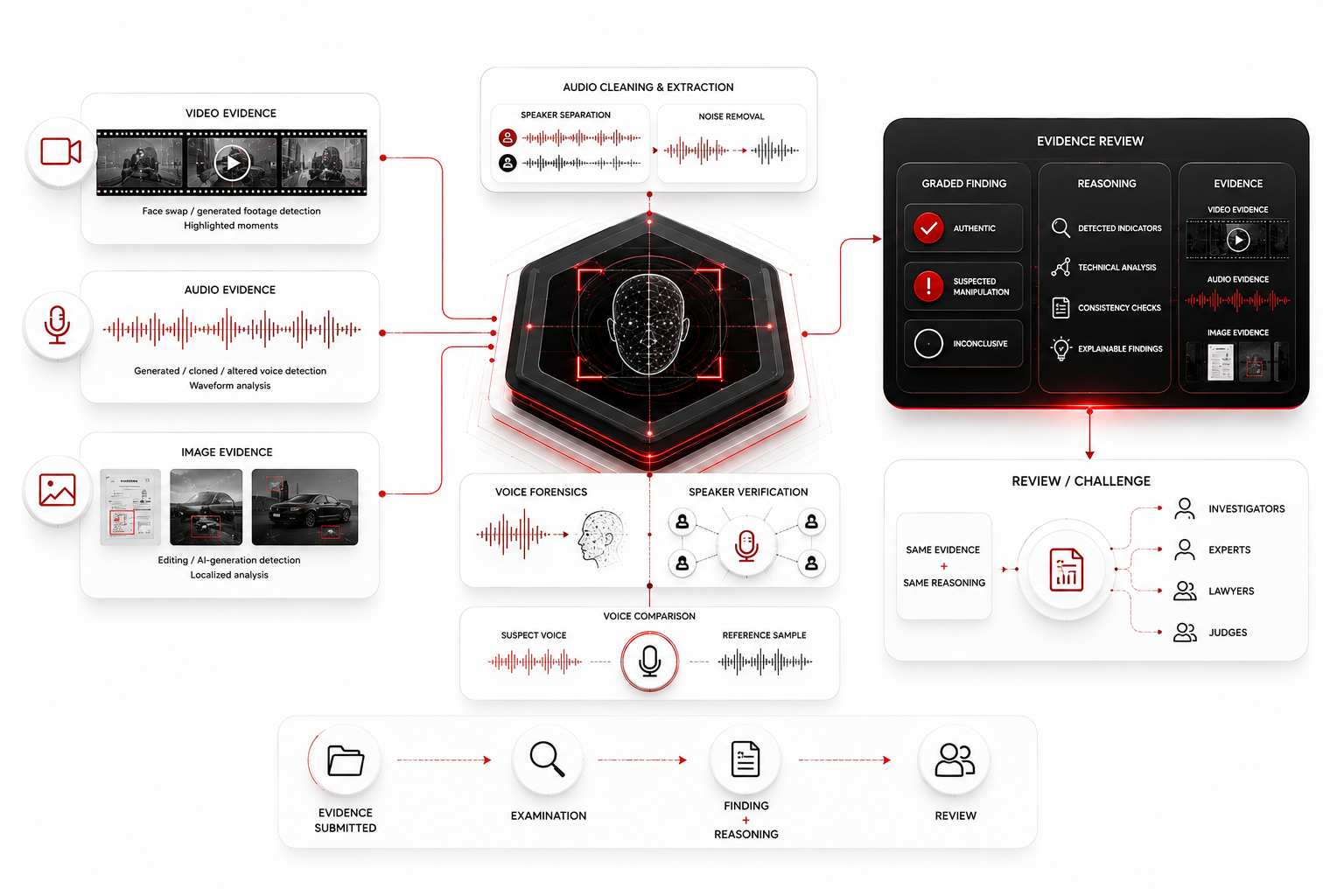
The checks below examine what was submitted and return a graded finding with the reasoning behind it, showing what was noticed and where. That is what lets a finding be reviewed by an expert instructed by the other side, explained to somebody who is not technical, and argued about properly rather than accepted or dismissed on trust.