
DeepAudioGuard
Know whether the voice in a recording is real or AI-generated. It listens to an audio or video file, examines it the way a forensic audio expert would, scores it with a neural network trained to recognise AI-cloned voices, and returns one evidence-backed verdict, Verified Authentic or Synthetic Deepfake, with a downloadable report
- Received
- Preparing
- Analysing
- Findings
- Result
Independent checks
- Speech behaviourwaiting
- Synthetic traceswaiting
- Recording traitswaiting
Interface simulation: an illustration of the workflow, not a live analysis
DeepAudioGuard
Can You Trust What You Hear?
Follow the evidence behind a voice
What it is
AI-powered deepfake audio forensic analysis
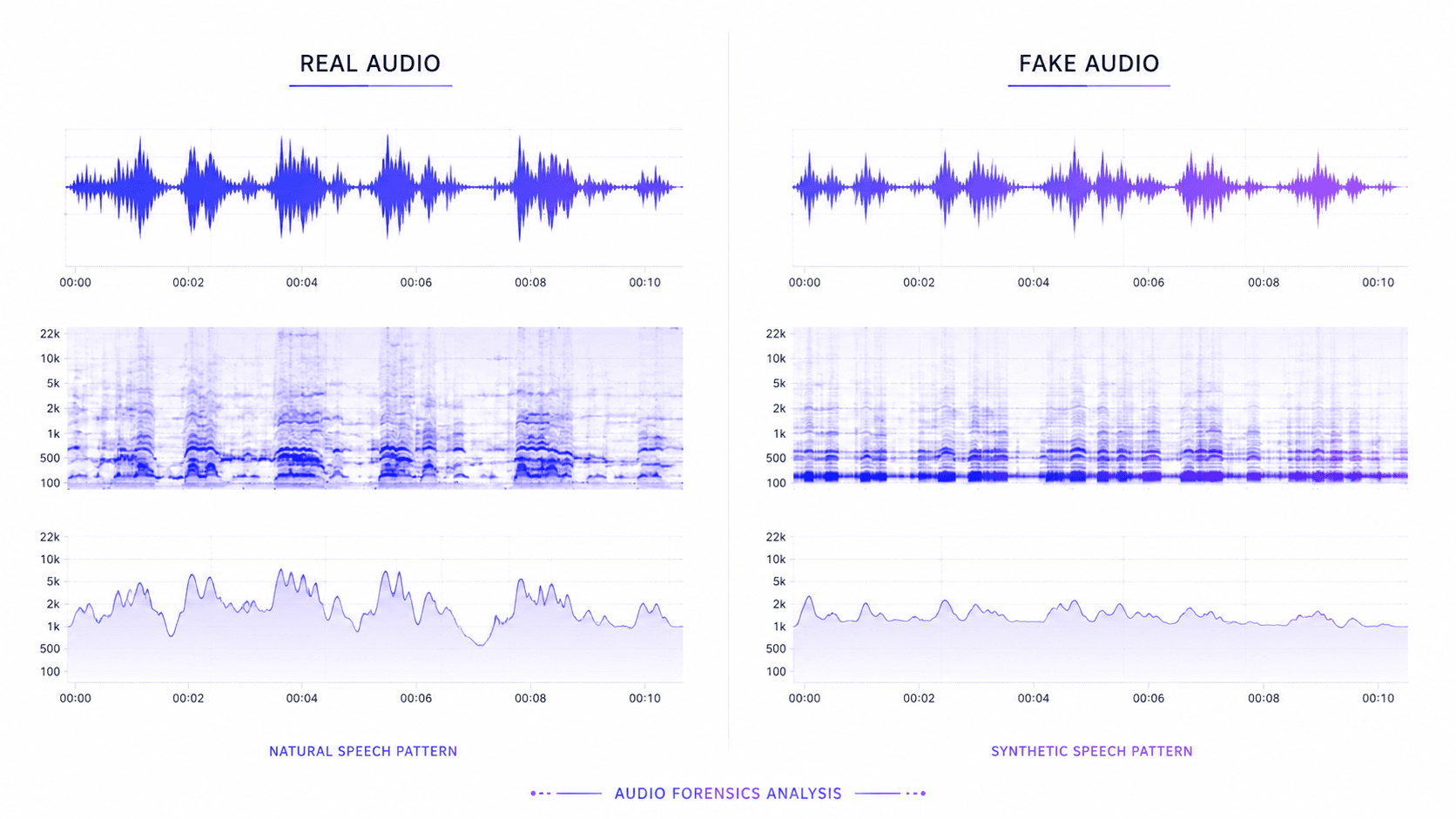
DeepAudioGuard is an audio authenticity and deepfake voice detection solution designed to help identify recordings that may contain AI generated, voice cloned, or manipulated speech.
Upload a voice recording, phone call, video clip, or voice note and the platform examines multiple characteristics of the audio for signs that may distinguish natural human speech from synthetic content.
The result is presented in an easy to understand authenticity assessment with supporting forensic findings, helping journalists, investigators, security teams, businesses, and other reviewers examine suspicious audio more confidently.
Rather than depending on one clue alone, different findings are considered together to provide a clearer understanding of the recording.
- Examines different characteristics of a recording together
Multiple signals
Examines different characteristics of a recording together
- Supports voice analysis from compatible audio and video files
Audio and video
Supports voice analysis from compatible audio and video files
- Provides an understandable indication of whether the voice appears authentic or synthetic
Clear assessment
Provides an understandable indication of whether the voice appears authentic or synthetic
- Supporting findings can be reviewed and documented in a downloadable report
Forensic reporting
Supporting findings can be reviewed and documented in a downloadable report
How it works
From an uploaded recording to a clear authenticity result
- 01
Upload
Submit the audio or video recording you want to check for signs of AI generated or manipulated speech.
- 02
Prepare
The relevant voice content is prepared for authenticity analysis while preserving the recording for review.
- 03
Analyse
DeepAudioGuard examines multiple characteristics of the voice and recording to identify unusual patterns or inconsistencies associated with synthetic audio.
- 04
Assess
The findings are brought together to determine whether the recording appears authentic or shows signs that require closer investigation.
- 05
Report
Receive an easy to understand authenticity result with supporting findings that can be reviewed, documented, and shared.
Interface simulation: an illustration of the workflow, not a live analysis
- 01
Upload
Submit the audio or video recording you want to check for signs of AI generated or manipulated speech.
- 02
Prepare
The relevant voice content is prepared for authenticity analysis while preserving the recording for review.
- 03
Analyse
DeepAudioGuard examines multiple characteristics of the voice and recording to identify unusual patterns or inconsistencies associated with synthetic audio.
- 04
Assess
The findings are brought together to determine whether the recording appears authentic or shows signs that require closer investigation.
- 05
Report
Receive an easy to understand authenticity result with supporting findings that can be reviewed, documented, and shared.
Product exclusiveness
What sets DeepAudioGuard apart
Multi signal authenticity analysis
Interface simulation: an illustration of the workflow, not a live analysis
How it compares
How DeepAudioGuard compares with other ways of checking a voice recording
Focused on voice and speech authenticity
- Enterprise voice security platforms
- Yes: Audio focused
- Basic online voice checkers
- Partly: Often several media types at once
- DeepAudioGuard
- Yes: Built for voice authenticity review
Considers several findings together
- Enterprise voice security platforms
- Partly: Varies by platform
- Basic online voice checkers
- No: Usually one indicator
- DeepAudioGuard
- Yes: Multiple signals in one assessment
Screens a live call while it is happening
- Enterprise voice security platforms
- Yes: Suited to call handling
- Basic online voice checkers
- No: Submitted files only
- DeepAudioGuard
- No: Reviews submitted recordings
Explains why a recording was flagged
- Enterprise voice security platforms
- Partly: Depends on the platform
- Basic online voice checkers
- No: A score with little context
- DeepAudioGuard
- Yes: Supporting findings in plain language
Shows progress while the analysis runs
- Enterprise voice security platforms
- No: Result only at the end
- Basic online voice checkers
- No: Result only at the end
- DeepAudioGuard
- Yes: Findings appear as they become available
Produces a report that can be documented and shared
- Enterprise voice security platforms
- Partly: Often a summary view
- Basic online voice checkers
- No: Rarely provided
- DeepAudioGuard
- Yes: Structured forensic report
Suits organizations handling sensitive recordings
- Enterprise voice security platforms
- No: Hosted service only
- Basic online voice checkers
- No: Hosted service only
- DeepAudioGuard
- Yes: Deployment options with greater control
The architecture
Four layers, one authenticity result
Review workspace
- Guided submissionSend a recording for review from one screen
- Live analysis viewFindings appear as the review progresses
- Report downloadKeep the assessment for records and sharing
Secure intake
- Supported recordingsVoice files and video containing speech
- Voice preparationSpeech is made ready for consistent review
- Controlled handlingRecordings stay within the chosen environment
Authenticity analysis
- Natural speech reviewHow closely the voice behaves like human speech
- Synthetic pattern checksTraces associated with cloned or generated voices
- Signals considered togetherIndependent findings gathered side by side
Assessment and evidence
- Authenticity assessmentWhether the voice appears authentic or synthetic
- Supporting findingsThe reasoning behind the assessment, in plain language
The deployment strategy
Three ways to deploy: private, packaged or production
01 · Private deployment
Interface simulation: an illustration of the workflow, not a live analysis
Deployment that fits your environment
Whether DeepAudioGuard is being evaluated internally or introduced into a larger production workflow, deployment can be aligned with organizational requirements for privacy, scalability, accessibility, and operational control.
Built for practical audio authenticity investigations
Where it runs, what it accepts, what it hands back, and how the findings should be read.
- Flexible analysis
- DeepAudioGuard is designed to support different operational environments, including situations where organizations want greater control over how recordings are analysed.
- Audio and video inputs
- The platform can analyse supported audio recordings as well as voice content contained within compatible video files. The documentation currently specifies WAV and MP4 as supported formats.
- Evidence focused output
- Analysis concludes with an understandable authenticity assessment and supporting forensic information that helps users review and document the findings.
- Designed for responsible interpretation
- Deepfake detection should support human investigation rather than replace it. Recording quality, compression, noise, and other conditions can affect analysis, particularly in high stakes situations. The documentation explicitly states that no detector is perfect and that results should not be regarded as absolute proof.
Frequently Asked Questions
DeepAudioGuard is designed to examine recordings for signs associated with AI generated, cloned, or manipulated voices. It considers multiple characteristics of the recording and presents the findings as an understandable authenticity assessment.
Certain deployment configurations can perform the core audio authenticity analysis within a controlled local environment without relying on external analysis services. Some optional capabilities may require connectivity depending on how the product is configured. This distinction is also stated in the product documentation.
The documented workflow currently supports compatible WAV audio and MP4 video files. When video is submitted, the voice content is prepared for audio authenticity analysis.
DeepAudioGuard provides analytical findings and a forensic report that may support an investigation. Legal admissibility depends on the jurisdiction, evidence handling procedures, chain of custody, and other applicable requirements. The product should therefore be used as an analytical aid rather than as a replacement for qualified forensic or legal assessment.
Deployment requirements depend on the expected workload and performance needs. The product can support different computing environments, with more capable infrastructure providing faster analysis where required.
DeepAudioGuard is designed as an audio authenticity investigation solution rather than only a simple real or fake checker. It combines multiple findings, provides visibility into the analysis, supports flexible deployment options, and produces forensic information that can assist further review. These are the core differentiators emphasized by both the documentation and the live product page.
No audio deepfake detector should be treated as infallible. Factors such as compression, background noise, recording quality, and rerecording can affect the available evidence. For important decisions, DeepAudioGuard findings should therefore form part of a wider investigation rather than being treated as absolute proof.
The rest of the line
More in SyntheticMediaGuard
Where it runs
Industries deploying DeepAudioGuard
Each sector page covers the threat model, the controls, and the regulators that apply.
Put a suspicious recording through the pipeline
Book a walkthrough and we will show the four chunks scored in parallel, the metrics behind the verdict, and the report it leaves behind.