Skip to content
FaceOff Technologies

Government & Public Safety

The photograph is the application

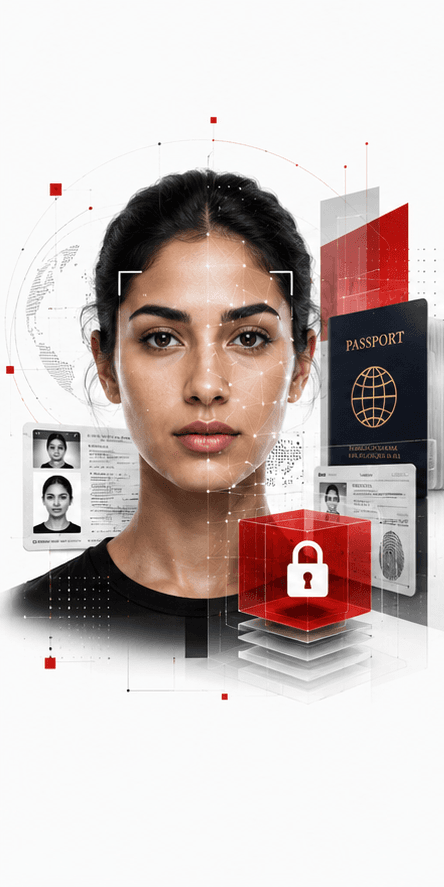
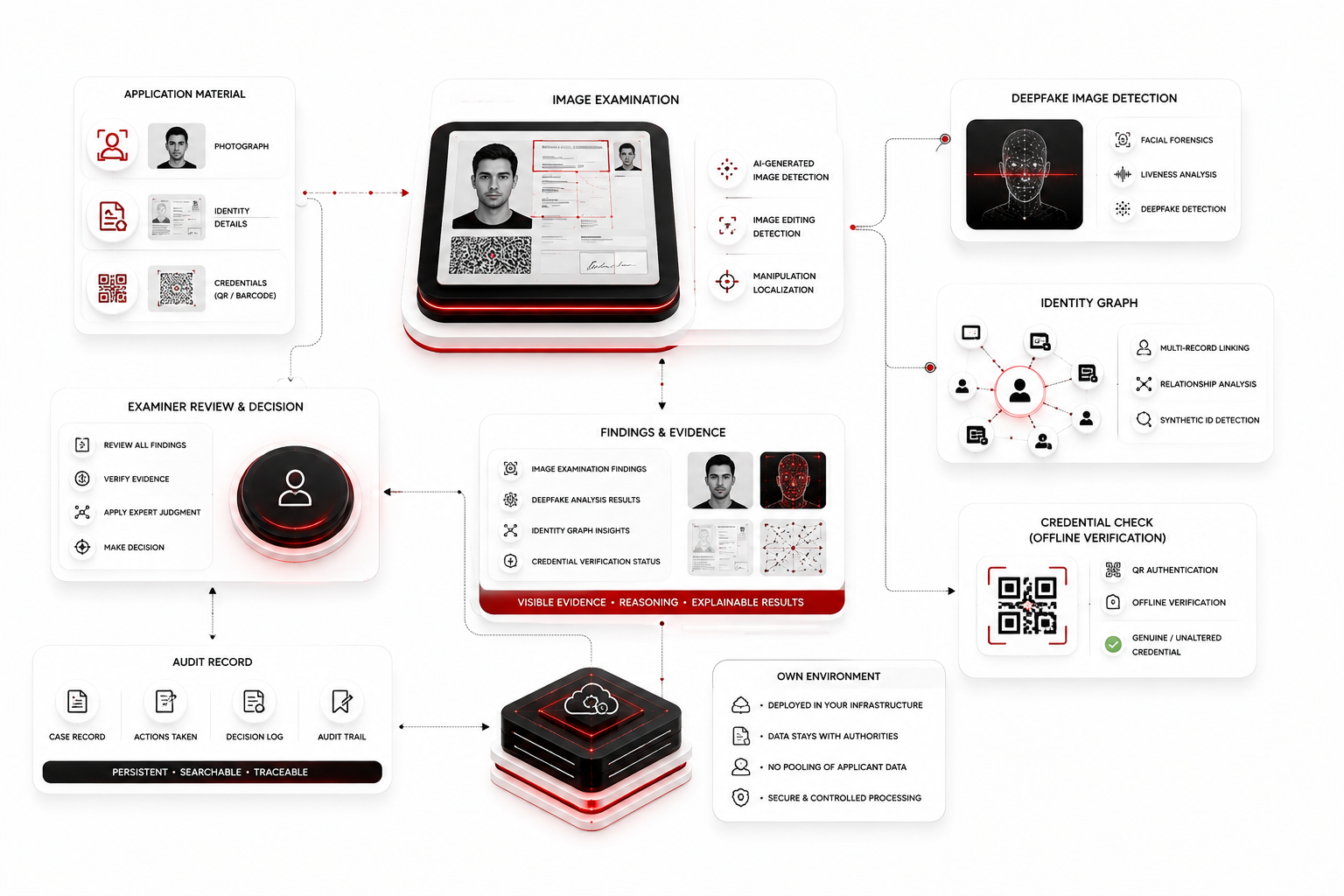
An identity document is issued on the strength of a photograph and a set of details the applicant supplied, and both can now be produced by software. FaceOff checks the image and the identity behind it before a document is issued, and hands an examiner the findings rather than a verdict

Overview

A document issued once is trusted for years

Check whether a facial photograph submitted with an application has been edited or generated, and whether the identity information behind it is consistent.

Passport and visa security verification

Almost everything an issuing authority does rests on a photograph and a set of details that the applicant provided. An examiner works from what was sent in, usually without ever meeting the person, and at a volume that leaves very little time for any single file.

Both halves of that are now straightforward to manufacture. A facial photograph can be generated or quietly altered so that it survives a visual check while belonging to nobody at all, and an identity can be assembled from genuine details taken from several different people, so every individual detail verifies correctly while the person described has never existed.

The consequence outlasts the decision by years. A passport or a visa issued on a false basis becomes a genuine document, accepted everywhere, and used to obtain everything else. The checks below examine what was submitted and give an examiner the findings behind the result at the only point where refusing is still an option.
What you deploy

Products for Passport & Visa

These are the products issuing authorities and border agencies deploy most often, covering the photograph submitted with an application, the identity behind it and the credential that is eventually issued.

DeepImageGuard

Detection of AI generated Deepfake Images

Explore

DeepFraudGuard

Assess the risk of deepfake impersonation and AI assisted fraud attempts

Explore

SyntheticFraudGuard AI

Graph analytics to detect synthetic identities.

Explore

QuantumSafe QR

Post-quantum QR for secure credentials and access.

Explore

Key capabilities

What FaceOff checks in passport & visa

What this sector asks for most often. Each one runs at the moment a decision is being made, and each returns a result a reviewer can explain to somebody else.

Check the photograph that was submitted

A facial image supplied with an application is examined for signs of editing or AI generation, and the areas that look altered are shown. An examiner sees what was found and where rather than receiving a verdict on its own.

An application photograph read against the passport submitted with it

Find an identity that was assembled rather than lived

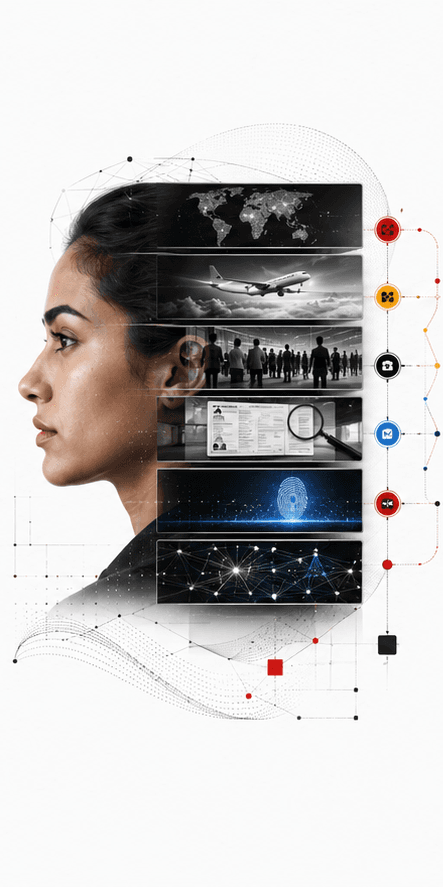
Some applications are built from genuine details belonging to several different people, which is exactly why every detail checks out. Records are read as a connected group instead, so a set of applications that no unrelated people would ever share becomes visible.

One applicant read across separate records

Give the issued document something that can be checked

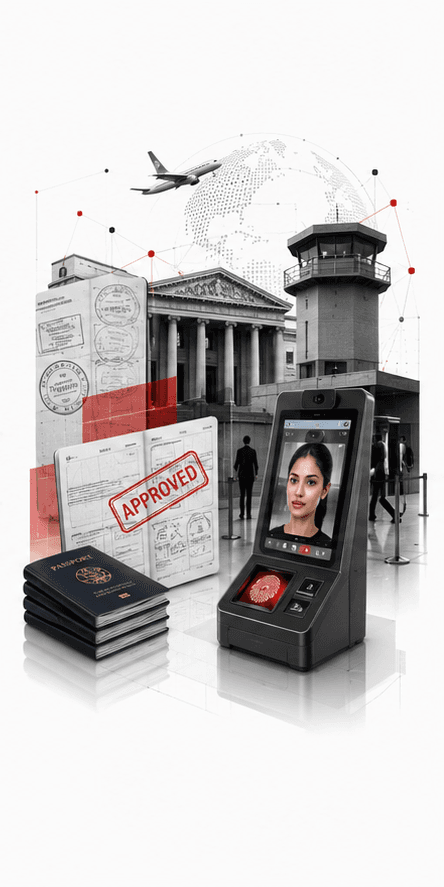
A credential can carry a code confirming it is genuine and has not been altered, and it can be verified without an internet connection at a border post or a counter. A copy of the code does not become a trusted code.

Issued passports and a border kiosk able to check them

Keep an examiner deciding

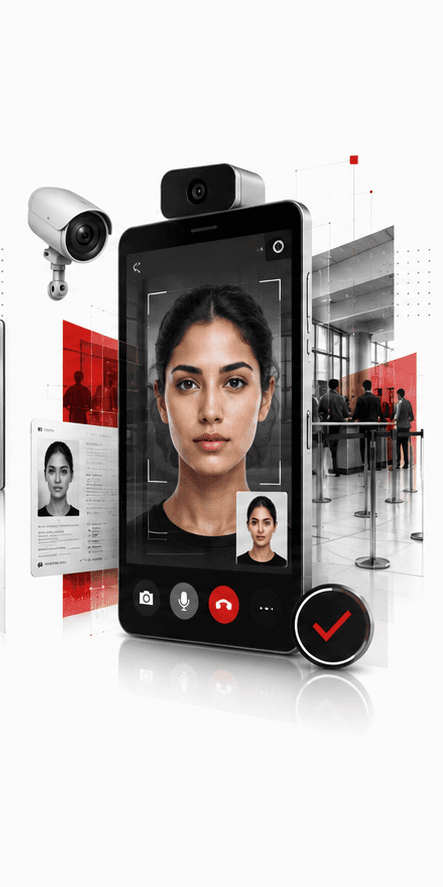
Nothing here refuses an application. Each finding reaches an officer with the reasoning attached, and the decision, any interview and any appeal remain entirely inside your own process.

A traveller's face captured at a kiosk beside their document

Grade the attempt behind the application

Where an application looks like an impersonation or an assisted attempt rather than one altered document, the risk is assessed and returned as a graded result. A difficult file can then be routed for closer examination instead of being settled at the counter.

Make a decision explainable years later

Every completed check leaves a record of what was examined and what was found, so a decision taken under time pressure can still be explained to an appeal, an inspection or a court long after the officer who took it has moved on.

Where it is used

What FaceOff runs in passport & visa

Every entry names a product on this site and describes it the way its own page does.

  1. Checking a submitted photograph

    DeepImageGuard checks an image for signs of editing or AI generation and shows which areas look manipulated.

  2. Scoring the attempt

    DeepFraudGuard assesses the risk that an application is a deepfake impersonation or an AI assisted attempt.

  3. Identities assembled from pieces

    SyntheticFraudGuard AI reads identity records as connections and surfaces groups built from stolen and invented details.

  4. Credentials that can be checked

    QuantumSafe QR gives a credential a code that confirms it is genuine and has not been altered.

Common questions

Passport & Visa, answered

DeepImageGuard checks a submitted image for signs of AI generation and editing and reports which areas look manipulated, so an examiner can review what was actually found rather than accept a score on its own.

See it score a real video

Bring your own footage. We will run it through the Adaptive Cognito Engine and walk you through the findings.