Skip to content
FaceOff Technologies

Financial Services

Insurance Fraud

Check claim photographs and recorded claimant statements for signs of editing or AI generation, and see the evidence behind every finding

Overview

A claim arrives as a photograph and a story

Check claim photographs and recorded claimant statements for signs of editing or AI generation, and see the evidence behind every finding.

Insurance fraud investigation and claim analysis

An insurer sees the damage through a photograph somebody else took, and hears the account of what happened through a recording. Neither can be examined in person, and both can now be produced by software convincingly enough that looking harder does not settle it.

The pressure runs in both directions. A claim refused on a hunch costs a genuine customer and invites a complaint. A claim paid on a fabricated photograph is rarely recognised as a loss at all, because nothing on the file looks wrong.

The checks below examine what was submitted and return a finding with the reasoning attached, so an assessor can act on it while the claim is still open and explain that decision later to the customer, an auditor or an ombudsman.

What you deploy

Products for Insurance Fraud

These are the FaceOff products most often deployed in this sector, in the order they usually land.

DeepImageGuard

Detection of AI generated Deepfake Images

Explore

DeepVideoGuard

Detection of AI generated Deepfake Videos

Explore

DeepFraudGuard

Assess the risk of deepfake impersonation and AI assisted fraud attempts

Explore

SyntheticFraudGuard AI

Graph analytics to detect synthetic identities.

Explore

Key capabilities

What FaceOff checks in insurance fraud

What this sector asks for most often. Each one runs at the moment a decision is being made, and each returns a result a reviewer can explain to somebody else.

Check the photographs submitted with a claim

Images attached to a claim are checked for signs of editing or AI generation, and the finding points to the areas of the picture that look altered. An assessor sees what was noticed rather than being handed a verdict to take on trust.

A household and a vehicle claim examined under a magnifier

Review a recorded statement without watching all of it

Recorded video from a claimant is checked for face swaps and generated footage, and the finding points to the moments worth watching. A long file becomes a short list of places to look rather than an afternoon of playback.

A recorded claimant statement being reviewed on screen

Find identities that were never real

Some policies and the claims made against them are built from genuine details belonging to different people, which is why every detail checks out on its own. Records are read as a connected group instead, so a set of policies that no unrelated customers would share becomes visible.

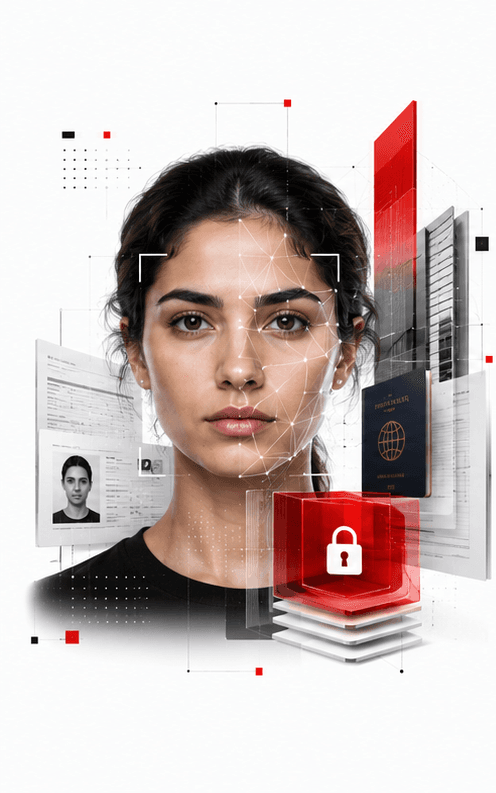
A face read against the identity documents submitted with it

Show the evidence behind every finding

No finding arrives on its own. Each carries what was noticed and where, so an assessor can act on it now and the decision can still be explained months later to the customer, an auditor or an ombudsman who has asked why the claim went the way it did.

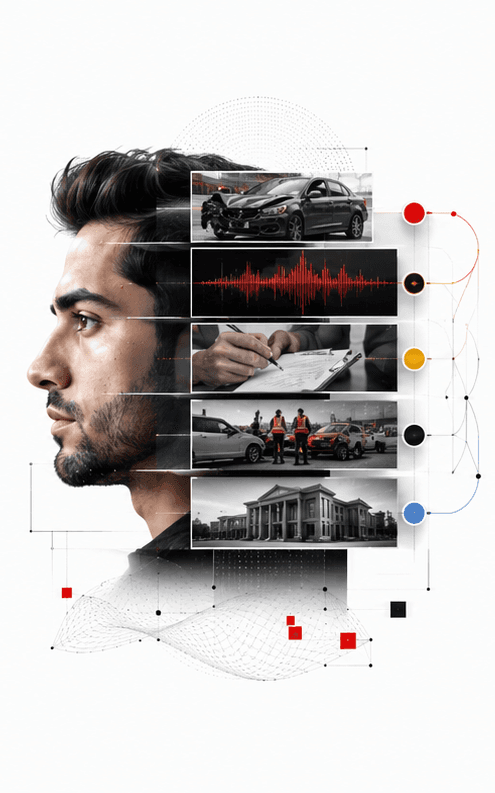
A claim read across photographs, recordings and records at once

Grade the attempt, not just the file

Some claims are not one doctored document but an impersonation carried through the whole submission. The attempt itself is assessed and returned as a graded result, so a borderline claim can be routed for closer handling instead of being waved through or refused outright.

Leave the honest claim alone

Most claims are exactly what they appear to be, and the checks are meant to pass over them. A claim that raises nothing continues through your normal process, so attention lands on the small number that earned it rather than on every customer who has had a bad week.

Where it is used

What FaceOff runs in insurance fraud

Every entry names a product on this site and describes it the way its own page does.

  1. Photographs submitted with a claim

    DeepImageGuard checks a submitted image for signs of editing or AI generation, and shows which areas look manipulated.

  2. Recorded claimant statements

    DeepVideoGuard checks recorded video for face swaps and generated footage, and points to the moments worth reviewing.

  3. Scoring an attempt rather than a file

    DeepFraudGuard assesses the risk that a claim is a deepfake impersonation or an AI assisted attempt, and returns a graded result.

  4. Identities that were never real

    SyntheticFraudGuard AI reads identity records as connections, surfacing groups built from stolen and invented details.

Common questions

Insurance Fraud, answered

Yes. DeepImageGuard checks a submitted image for signs of editing or AI generation and highlights the areas that look manipulated, so an assessor can see what was found rather than rely only on a score.

See it score a real video

Bring your own footage. We will run it through the Adaptive Cognito Engine and walk you through the findings.