
Keep how it was said, not only what was said
Delivery, steadiness and tone are kept alongside the words, so the difference between a customer who agreed and a customer who gave up is still visible to somebody reviewing the call weeks later.
Media & Enterprise
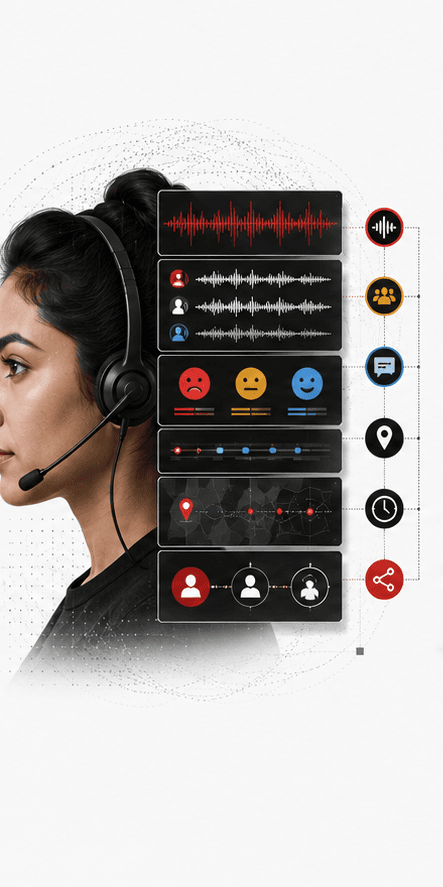
A conversation carries more than its words. Who was speaking, how they said it and where they hesitated are all part of what happened, and a block of text keeps none of it. FaceOff makes a recorded conversation reviewable, with what was said, who said it and how it was said held together in one place
Overview
Turn recorded conversations into something a team can review, with what was said, who said it and how it was said all in one place.
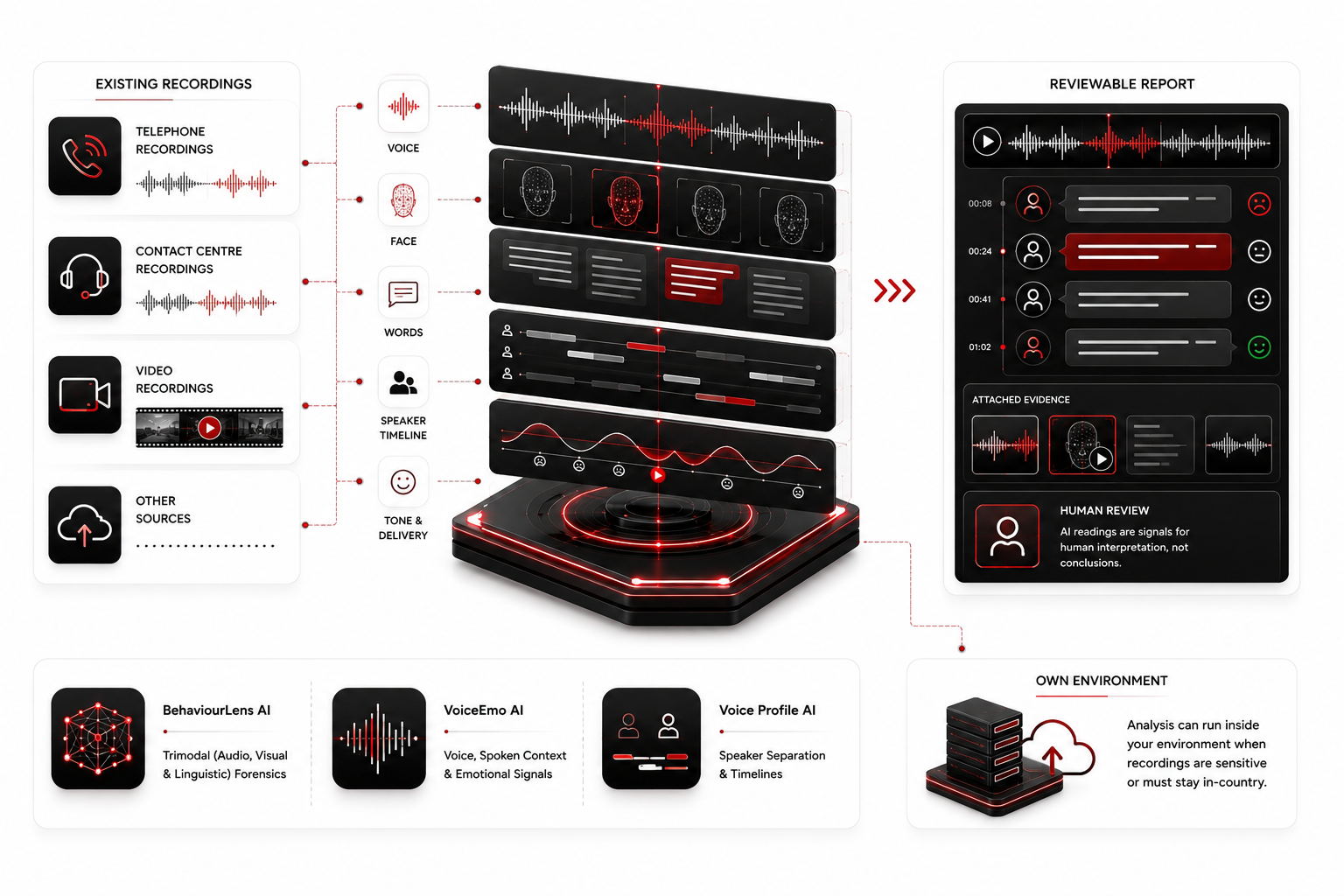
Most teams already record their calls and most already transcribe them. What they are left with is searchable text, which answers what words were used and almost nothing else. The reason a customer left, the moment an agent lost them, and the difference between genuine agreement and simply giving up are not in the words.
So the recordings get shelved. Nobody has time to listen to a thousand calls, a sample of ten proves nothing, and a written summary carries the reading of whoever listened rather than the conversation itself. The material an organisation has the most of ends up being the material it uses the least.
The tools below keep the parts a transcript discards. A conversation comes back with the speakers separated and laid out in order, and with how something was said kept beside what was said, so a team reviews the conversation rather than somebody's summary of it.
What you deploy
These are the products customer experience, quality and research teams deploy most often, covering how something was said, who said it and how a whole conversation reads once all of it is kept together.
Autonomous voice interviewer with trimodal audio, visual and linguistic forensics.
ExploreKey capabilities
What this sector asks for most often. Each one runs at the moment a decision is being made, and each returns a result a reviewer can explain to somebody else.
Delivery, steadiness and tone are kept alongside the words, so the difference between a customer who agreed and a customer who gave up is still visible to somebody reviewing the call weeks later.
A recording with several people in it is separated by speaker and laid out as an ordered timeline, so a conversation can be followed and one participant traced through it without anybody replaying the whole file from the start.
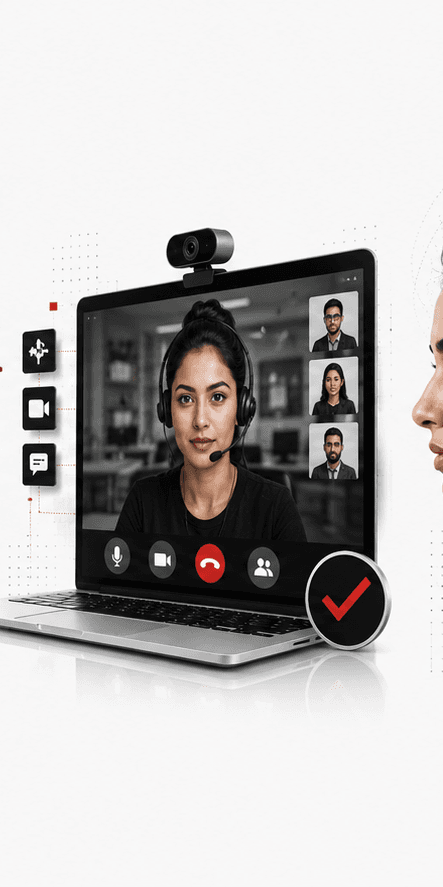
Where there is video as well as audio, voice, face and words are read together and a reading is produced for each turn in the conversation. That is much closer to how a person actually judges a conversation than reading a transcript of it.
Conversations return as timelines and reviewable reports rather than as raw output, so a finding can be shown in a meeting, handed to a team leader and revisited later with the original material still attached to it.
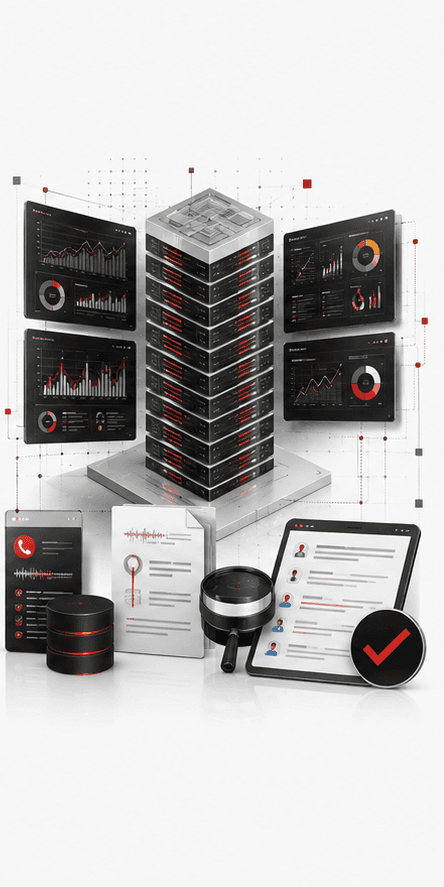
Audio in the formats a contact centre really produces, telephone recordings included, can be used as it is. The value comes from material already sitting in your archive rather than from starting a new collection exercise.
Quality review usually means listening to a handful of calls and hoping they were representative. When every conversation comes back organised and readable, attention can go to the ones that stand out rather than to the ones that happened to be picked.
Where it is used
Every entry names a product on this site and describes it the way its own page does.
VoiceEmo AI brings voice, spoken context and emotional signals into one view.
Voice Profile AI separates speakers and lays out an organised timeline for audio with several people in it.
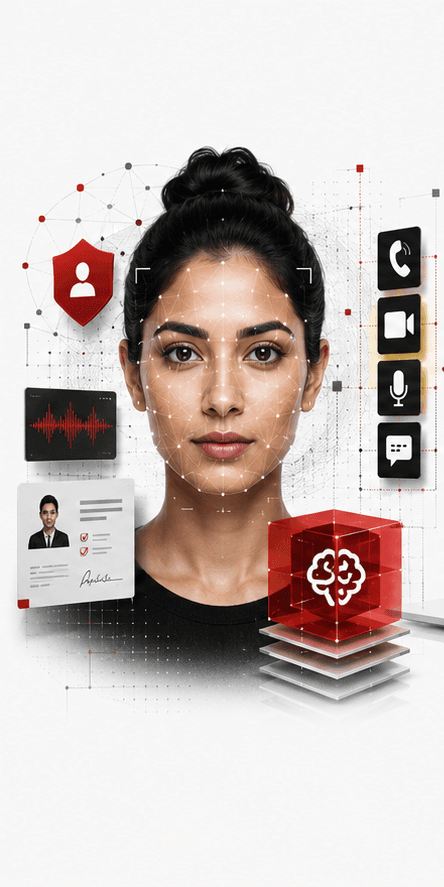
BehaviourLens AI reads voice, face and words together and produces a reading for each turn.
Common questions
A transcript keeps the words. VoiceEmo AI keeps how they were said, and Voice Profile AI keeps who said them and when. Together they make a recording reviewable rather than merely searchable, which is the difference between finding a call and understanding what happened on it.
Yes. Voice Profile AI separates speakers and builds an organised timeline with consistent tracking of each one, so a conversation with several participants can be followed from beginning to end.
No. It is a structured view of a recording with the signals it was drawn from kept alongside it, for a person to interpret. It describes a conversation rather than a personality, and it is not a measure of whether somebody is telling the truth.
Voice Profile AI supports the formats contact centres actually produce, including telephone recordings, so an archive you already hold can be used rather than replaced.
Yes. BehaviourLens AI holds a spoken conversation and reads voice, face and words together, producing a reading for each turn, which suits structured interviews and research sessions as well as service calls.
Yes. Recording conversations and analysing them is governed by the law where you operate and by your own privacy notices, and that obligation sits with you rather than with any tool. Analysis can run inside your own environment where recordings are sensitive or must stay in the country.
Analysis can run inside your own environment, so a customer conversation does not have to be handed to somebody else in order to be reviewed.
No. It changes what they spend their time on. Instead of listening to a sample and hoping it was representative, a quality team receives every conversation in a readable form and decides for itself where to look.
Signals about delivery and tone are exactly that, signals, and they are kept beside the conversation rather than replacing it. A reading is a reason to listen to a call, never a conclusion about the person on it, which is why the material it was drawn from always stays attached.
Bring your own footage. We will run it through the Adaptive Cognito Engine and walk you through the findings.