Skip to content
FaceOff Technologies

Financial Services

Telecom & Handset OEMs

Verification that runs on the handset itself, helping carriers protect against SIM swap, support safer activation, and identify fraud signals during sign up

Overview

The handset is where trust is won or lost

Verification that runs on the handset itself, helping carriers protect against SIM swap, support safer activation, and identify fraud signals during sign up.

Telecom and handset OEM technology

A carrier decides who a customer is when a service is activated, and that decision is trusted every time the phone is used afterwards. Banks, government services and payment apps all lean on it, usually by sending a code to the number and treating whoever receives it as the customer.

That inheritance is the weakness. When a number moves to another device, whether through a swap arranged at a counter or a port that should never have been approved, the trust moves with it, and every service downstream keeps honouring a decision that is no longer true.

The checks below run on the device and confirm the person through their behaviour and appearance rather than relying only on a code that can be redirected, so the account stays attached to the customer rather than to whichever handset currently holds the number.

What you deploy

Products for Telecom & Handset OEMs

These are the FaceOff products most often deployed in this sector, in the order they usually land.

BehaviorBioAuth (Onboarding)

Behavioral biometric identity verification.

Explore

Facepay

AI facial authentication for secure, frictionless payments.

Explore

DeepFakeFinder

Find and verify suspected deepfakes of a person across online platforms.

Explore

Key capabilities

What FaceOff checks in telecom & handset oems

What this sector asks for most often. Each one runs at the moment a decision is being made, and each returns a result a reviewer can explain to somebody else.

Confirm a real person at activation

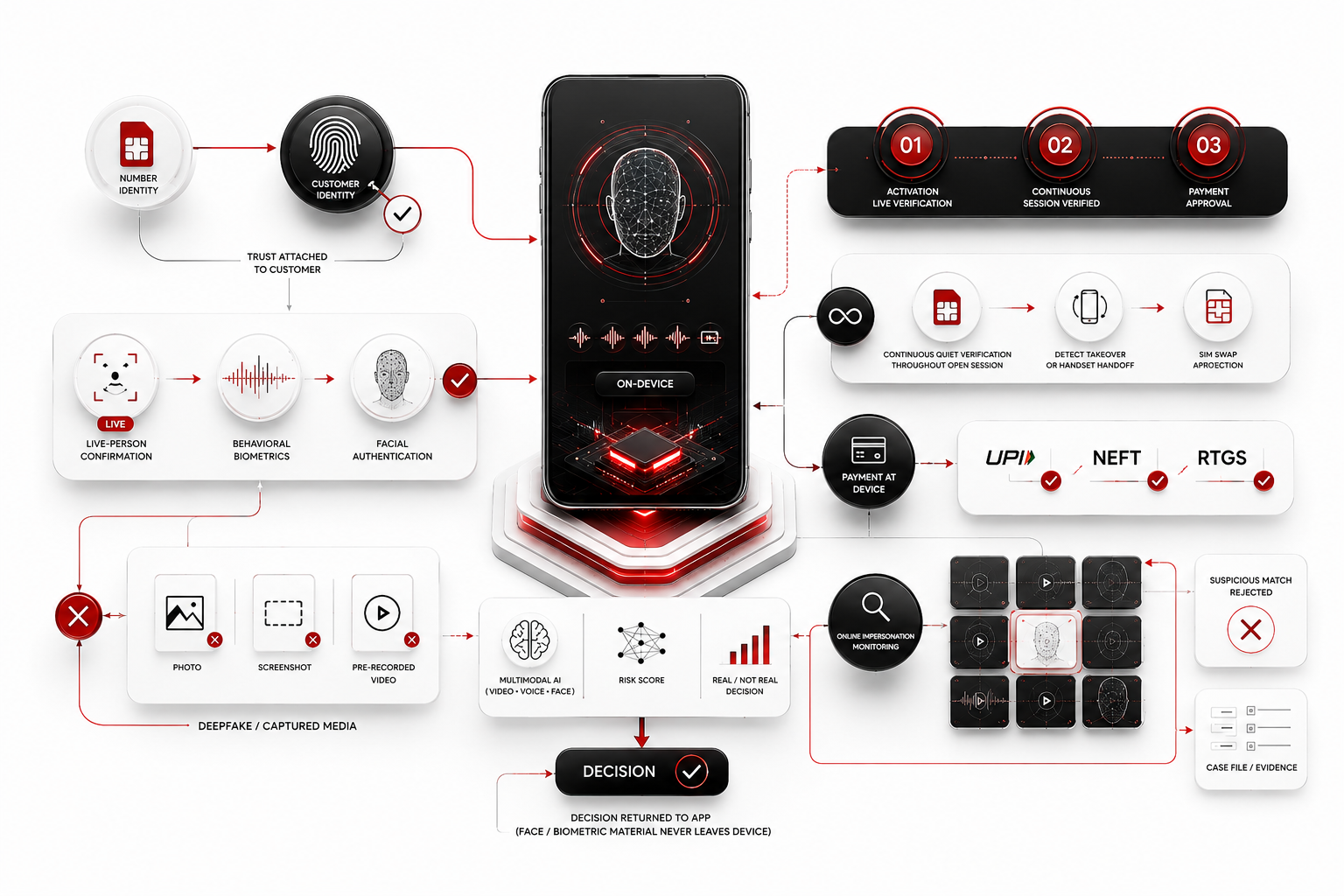
Before a connection or a new service is activated, the applicant is confirmed as a live person rather than a photograph, a recording or somebody standing in for them, at the point where the activation can still be refused rather than after it has been used.

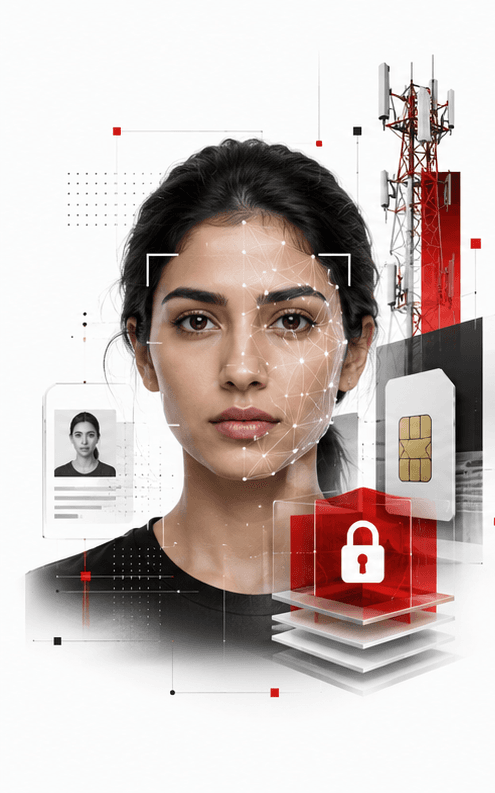
A face read against a SIM and the identity documents behind it

Keep trust with the person, not the number

A one time code belongs to whichever device currently holds the number. Confidence is held against the customer instead, so a number that has moved to another handset does not automatically carry the account and everything attached to it along with it.

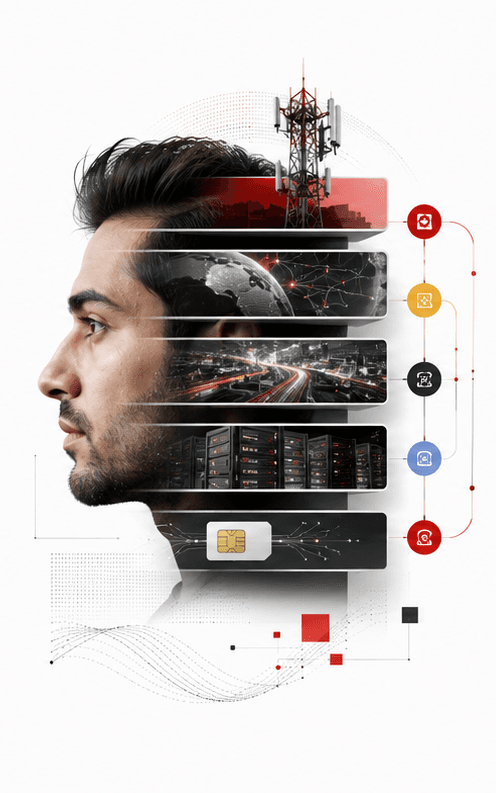
One subscriber read across the network's own records

Keep checking after the session has started

A session that was genuine at sign in can change hands part way through, which is where a plan change, a port request or a beneficiary edit tends to happen. The customer is confirmed quietly while the session is open, so a takeover is caught while it is running.

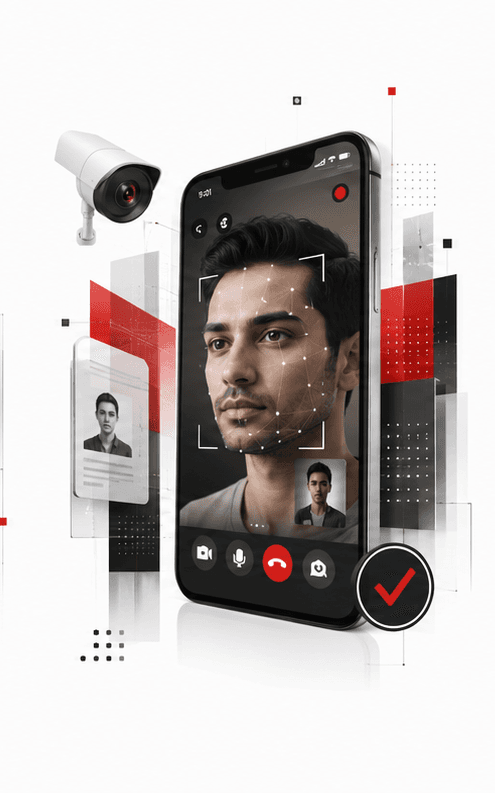
A live handset session with the caller's face being checked

Approve a payment at the handset

A payment is approved by confirming that a live, enrolled person is present and willing, so the approval belongs to the customer rather than to a device or a code that can be redirected. It covers the everyday rails customers already use, including UPI, NEFT and RTGS.

Masts, handsets and the network standing behind them

A check a recording cannot pass

Somebody holding a photograph, a screen capture or a video of the customer taken earlier should not be able to present it and be accepted as them. The check is built to resist material captured in advance rather than treating any face in front of the camera as a person.

Find fakes of your customers and your brand online

Impersonating images and video of a person, including the executives and public faces a brand is recognised by, are searched for across online platforms and each match is checked against the real person. The result is kept as a case file that supports a takedown or a complaint rather than a screenshot in somebody's inbox.

Where it is used

What FaceOff runs in telecom & handset oems

Every entry names a product on this site and describes it the way its own page does.

  1. Confirming the person, not the number

    BehaviorBioAuth checks identity from behaviour, continuously, so a session that changes hands part way through is caught.

  2. Approving a payment

    Facepay confirms a live, enrolled person is at the handset and is willingly approving the payment.

  3. Fakes of a customer or a brand online

    DeepFakeFinder traces suspected deepfakes of a person across online platforms.

Common questions

Telecom & Handset OEMs, answered

A one time code follows the number. BehaviorBioAuth checks the person instead and keeps checking through the session, helping identify a takeover after the session has started.

See it score a real video

Bring your own footage. We will run it through the Adaptive Cognito Engine and walk you through the findings.