
News · Newsroom · 1 week ago
Wall Street Learns: Voice Is No Longer Proof
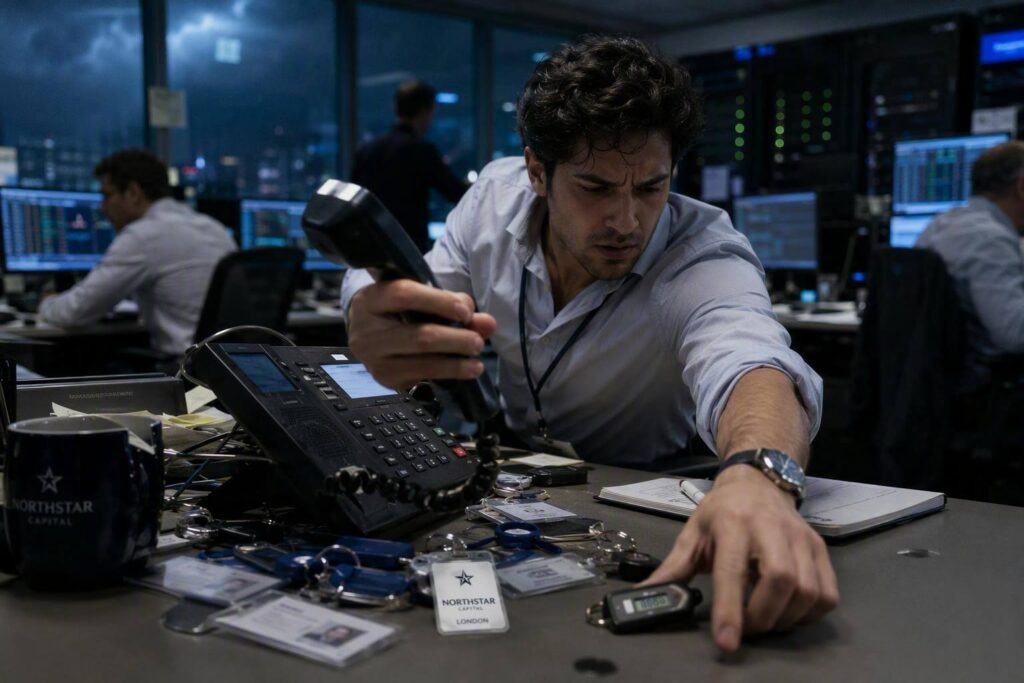
A coordinated voice-phishing campaign targeting major U.S. asset managers has exposed a critical weakness in financial-sector security: hearing a familiar voice no longer proves who is speaking.
Firms including Point72, Two Sigma and Citadel were reportedly among those targeted by attackers impersonating trusted colleagues. Early reports indicated that the attempted intrusions did not result in client-data losses at the firms that publicly discussed their response.
AI Changes the Economics of Vishing
Voice phishing is not new, but generative AI dramatically increases its scale and credibility. Attackers can potentially learn how an executive or employee speaks and reproduce characteristics such as tone, cadence and delivery using increasingly accessible voice-generation technologies.
This makes conventional human verification weaker. Employees can be trained to recognize suspicious requests, but distinguishing a sufficiently convincing synthetic voice by ear is an increasingly difficult security expectation.
Financial institutions have spent decades strengthening other communication channels. Email has authentication controls, logins have MFA and conditional access, and sensitive data transfers have encryption and monitoring. Yet phone calls often continue to rely on familiarity as authentication.
That becomes particularly dangerous when voice is used for password resets, payment approvals, account changes, privileged access or urgent executive instructions.
The Help Desk Becomes a Critical Target
IT service desks deserve particular attention because their role frequently involves helping employees who cannot complete normal authentication. Attackers can exploit this exception process by impersonating executives or employees and pressuring support personnel into resetting credentials or granting access.
Financial organizations therefore need to identify every high-risk business process that still depends on verbal authorization and introduce independent, non-verbal verification before sensitive actions are executed.
Authentication Must Move Beyond Voice
Deepfake detection can provide another defensive signal by analyzing live audio or video for signs of synthetic manipulation. But deepfake detection should complement not replace strong authentication.
A more resilient workflow would be:
The crucial change is timing. Detecting suspicious characteristics while the conversation is happening can enable an organization to stop or escalate a request before credentials are reset, systems are accessed or money moves.
For financial institutions, this creates a powerful new Zero Trust principle:
Never authenticate authority by voice alone. Verify the person, verify the channel and verify the request.
The Wall Street campaign is therefore more than another phishing incident. It demonstrates that voice itself has become an attack surface and banks, asset managers and enterprises must begin securing conversations with the same rigor they already apply to identities, devices and transactions.